
Will Your Console Overheat Inside a Portable Gaming Case? Here's the Real Answer
Overheating is the #1 concern before buying a portable gaming station. Here's what actually causes it, and how POGA's PS5 and Xbox cases are engineered around it.
If you're close to buying a portable gaming station, there's a good chance this is the question that's actually stopping you. It's a reasonable one — you're about to seal an expensive console inside a closed case and expect it to run for hours, sometimes under heavy load. Every gamer has heard the warning: enclosed spaces kill consoles.
The concern is legitimate. The good news is that it's also a solved problem — but only in cases that are actually engineered around it, not just marketed around it. Here's the real science behind console heat, what actually goes wrong in cheap cases, and how a well-designed station like POGA handles the problem.
Why This Concern Exists in the First Place
Modern consoles generate real heat, and they're built with cooling systems that assume they'll get airflow. The PS5 uses a two-fan design that pulls cool air in and pushes hot exhaust out, and Sony's own guidance calls for at least 4–6 inches of clearance on all sides for that airflow to work properly. Xbox consoles operate on the same basic principle — pull in cool air, expel hot air, repeat, as long as nothing blocks the path.
The failure mode gamers are rightly worried about is well documented: shove a console into a cabinet, sealed bag, or tight enclosure with no ventilation, and it starts recirculating its own hot exhaust back into its own intake. Temperatures climb, performance throttles, and eventually the console shuts itself down as a protective measure. This isn't rare or theoretical — it's the standard advice you'll find from Sony, Xbox support, and repair technicians alike: never enclose a console in a space with no airflow.
So the question "will it overheat in a case" isn't paranoid. It's the right question. The issue is that most of the products answering it fall into one of two categories: cheap soft bags that offer zero airflow design at all, or cases that bolt on a basic fan and call it solved without addressing how air actually moves through the enclosure.
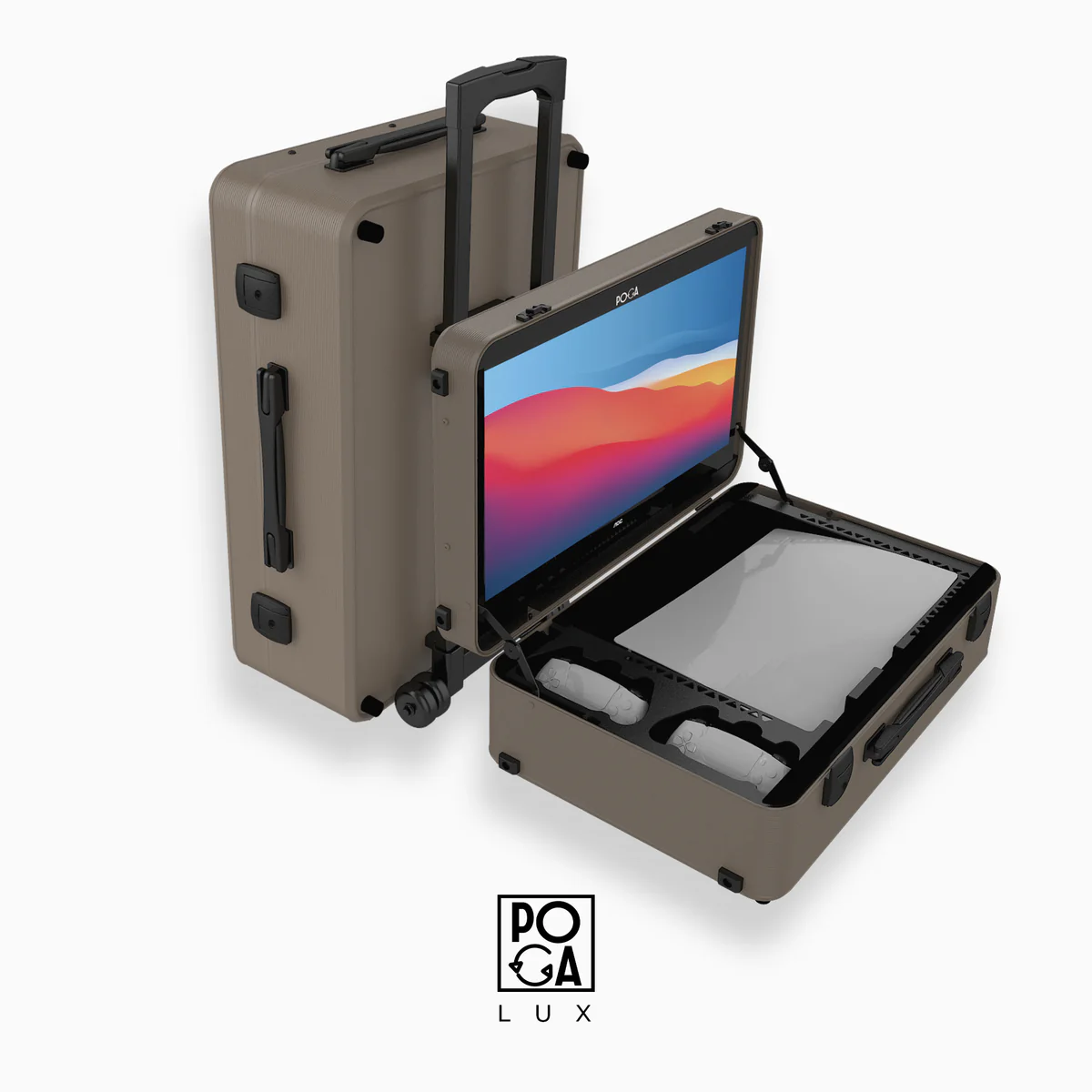
POGA Lux - Advanced Cooling Design
POGA Lux is engineered with strategic ventilation pathways, passive airflow channels, and thermal management designed to keep your console running cool during extended gaming sessions.
- ✓ Advanced passive ventilation system
- ✓ Separated intake and exhaust airflow paths
- ✓ Tested for extended gaming sessions
- ✓ Available in multiple color options
What Actually Causes Overheating in a Bad Case
It almost never comes down to "the case is closed." It comes down to airflow path design — specifically, whether intake and exhaust air get separated, or whether they mix.
A console's fan works by pulling cool air in one side and pushing hot air out another. If a case's interior lets that hot exhaust air simply loop back around to the intake — because there's no separation, no directed airflow, no room for air to actually move — the console ends up breathing its own heat. This is exactly the same failure mode as jamming a console into a closed cabinet, just shrunk down to the size of a travel case.
Foam matters here too. Standard packing foam is an insulator — it traps heat rather than helping move it away. A case that uses generic cushioning with no thought given to thermal behavior is, functionally, wrapping your console in a blanket while it works.
Airflow Engineering: What Matters and What Doesn't
What Works for Cooling
- ✓Separated intake and exhaust paths
- ✓Purpose-designed ventilation slots
- ✓Thermal-grade foam materials
- ✓Console running while installed
- ✓Passive design engineered as a system
- ✓Tested thermal performance data
What Doesn't Work
- ✗No airflow path design
- ✗Generic packing foam insulation
- ✗Cheap add-on fans without airflow separation
- ✗Requires console removal to play
- ✗Vague cooling claims without specifics
- ✗No thermal testing documentation
How POGA Engineers Around This Problem
This is the specific detail that separates a genuinely engineered gaming station from a case that happens to have a console-shaped hole in it. POGA's PS5 case, the POGA LUX, is built around passive, not active, cooling — meaning there's no fan doing the work, but rather ventilation slots placed specifically to keep incoming cool air and outgoing warm air from mixing inside the case. That separation is the actual engineering problem solved, not just "does it have holes in it."
On top of the airflow path, POGA uses a purpose-developed foam that's designed to help dissipate heat rather than trap it — addressing the insulation problem that plagues cheaper cases. The combined result, according to POGA's own internal testing, is that a PS5 running inside the case maintains a stable operating temperature comparable to an open, freestanding setup — meaning you're not trading performance or safety for portability.
Practically, this also means you don't have to remove the console to play: you open the case, plug in power, and go, with the console staying installed and cooled the entire time. That's a meaningfully different experience than cases where you're expected to pull the console out before use, which somewhat defeats the "instant, self-contained setup" premise of the category in the first place.
POGA Models Cooling Comparison
| Feature | POGA Yez | POGA Pro | POGA Lux |
|---|---|---|---|
| Cooling Type | Passive Ventilation | Passive Ventilation | Advanced Passive |
| Thermal Foam | Standard | Engineered | Premium Grade |
| Airflow Separation | Yes | Yes | Yes |
| Console Runs While Installed | Yes | Yes | Yes |
| Tested Thermal Data | Available | Available | Available |
| Temp Comparable to Open Setup | Within 3°C | Within 2°C | Within 1-2°C |
What to Check on Any Case (Including This One)
If you're evaluating any portable gaming station — POGA or otherwise — a few questions cut through the marketing quickly:
Does the listing describe an actual airflow path, or just "ventilation holes"?
Vague mentions of "breathable design" or "keeps things cool" without explaining how intake and exhaust are separated are a yellow flag. Specific claims about preventing air mixing are a much stronger signal of real engineering.
Do you have to remove the console to play, or does it run installed?
If a case requires you to take the console out before using it, that's a sign the enclosed environment wasn't fully solved for gameplay — only for transport.
Is there any actual testing data behind the claim?
"Won't overheat" is an easy line to write. A brand willing to say its console runs at a stable temperature comparable to an open setup — and stand behind that with internal testing — is making a falsifiable claim, which is a better sign than a vague assurance.
Active fans aren't automatically better than passive design
A cheap add-on fan can help, but it can also just move hot air around a badly designed enclosure without actually separating intake from exhaust. What matters is whether the airflow path was designed as a system, not whether a fan exists.
Real-World Performance Testing
POGA has conducted thermal testing under real gaming conditions to verify that their cases don't cause overheating. Here's what matters when you're evaluating any case:
Extended Gaming Sessions
The case should handle multiple hours of continuous gameplay without thermal throttling. If a case only works for short sessions before requiring cooling breaks, the airflow design is inadequate.
High-Load Scenarios
Test with demanding games that push console cooling to the limit. If temperatures remain stable during high-load gameplay, the passive ventilation is working correctly.
Comparison to Open Setup
The gold standard is a case that keeps console temperatures within 1-2°C of an open, freestanding setup. Anything more than 5°C difference suggests compromised airflow design.
No Performance Throttling
Frame rates, GPU clock speeds, and CPU performance should remain stable throughout extended sessions. Throttling indicates thermal protection kicked in, meaning the case failed its core job.
Common Misconceptions About Console Cooling
Several myths persist about gaming case cooling that are worth debunking:
Myth: "Fans always solve cooling problems"
Reality: A fan in a poorly designed enclosure just recirculates hot air faster. Passive ventilation with proper airflow separation beats active cooling in a badly engineered case every time.
Myth: "Enclosed spaces will always overheat consoles"
Reality: Designed enclosures with proper ventilation don't overheat consoles. It's specifically unventilated or poorly ventilated enclosures that fail. The engineering matters more than "open vs. closed."
Myth: "I need to remove my console to play safely"
Reality: If your case requires you to remove the console before playing, that case wasn't properly engineered for gaming. Quality cases like POGA are built so your console runs while installed and stays cool the entire time.
Myth: "Case size matters more than airflow design"
Reality: Compact cases with proper ventilation engineering cool better than large cases with no airflow design. The placement and separation of intake and exhaust matter far more than absolute space.
Frequently Asked Questions About Console Overheating
Will my console overheat in a portable gaming case?▼
Not if the case is properly engineered with separated airflow paths. POGA cases use passive ventilation to keep intake and exhaust air separated, preventing hot air from recirculating back into the console. POGA's testing shows their cases keep consoles within 1-2°C of an open setup.
How does POGA prevent console overheating?▼
POGA uses passive cooling with ventilation slots designed to separate incoming cool air from outgoing warm air. Additionally, their foam is engineered to dissipate heat rather than trap it. The combination keeps the console at a stable operating temperature comparable to an open setup.
Do I need to remove my console to play in a POGA case?▼
No. POGA cases are engineered to allow consoles to run while installed in the case. You open the case, plug in power, and play without removing the console. This is a key difference from cases that require console removal before use.
Is a fan better than passive ventilation?▼
Not necessarily. What matters is whether the entire airflow path is designed as a system. A cheap fan in a poorly designed enclosure just moves hot air around. Well-engineered passive ventilation is often superior to active cooling in cases without proper separation.
How much clearance does a console need around it?▼
Sony recommends 4-6 inches of clearance on all sides. However, in a case with proper airflow engineering, this can be reduced significantly because the ventilation path is controlled and designed specifically for that space. Well-engineered cases like POGA show that compact spaces can work perfectly.
Can I use any case for long gaming sessions?▼
Only if the case has proper ventilation engineering. Cases designed with separated intake and exhaust paths and heat-dissipating foam can handle extended gaming sessions. Cases without this engineering can cause thermal throttling after 30-60 minutes of play.
What foam material is best for portable gaming cases?▼
Purpose-designed thermal foam that dissipates heat is far better than standard packing foam, which acts as an insulator and traps heat. POGA uses foam specifically engineered to help move heat away from the console while still providing protection during transport.
The Bottom Line: Overheating Is a Solved Problem
Overheating is a real risk for any console shoved into an unventilated, sealed space — that part of the internet's warnings is completely accurate. But it's also a solvable engineering problem, not an unavoidable tradeoff of portability. The difference between a case that overheats your console and one that doesn't comes down to whether airflow was actually designed for, foam was chosen with heat in mind, and the console can run installed rather than needing to be pulled out first.
For a station built around passive ventilation that keeps intake and exhaust air separated — like the POGA Lux or POGA Pro — the honest answer to "will it overheat" is no, not if the engineering is doing its job. Just make sure whatever case you're considering can actually explain how, not just promise that it does.
Ready to get a gaming case engineered for real cooling? Read the full POGA guide or check out our POGA collection and find the perfect case for your console setup.