
Shop portable gaming station options for ten minutes and the price spread will confuse you. A PS5 travel bag on Walmart runs $25. A premium case with a built-in monitor runs anywhere from a few hundred dollars to close to $2,000. Both call themselves a portable gaming case. Neither price is wrong — they’re just describing very different products wearing the same search term.
Here’s what actually drives that price spread, broken into the three real tiers this category falls into, so you can figure out what you should actually be paying for what you need.
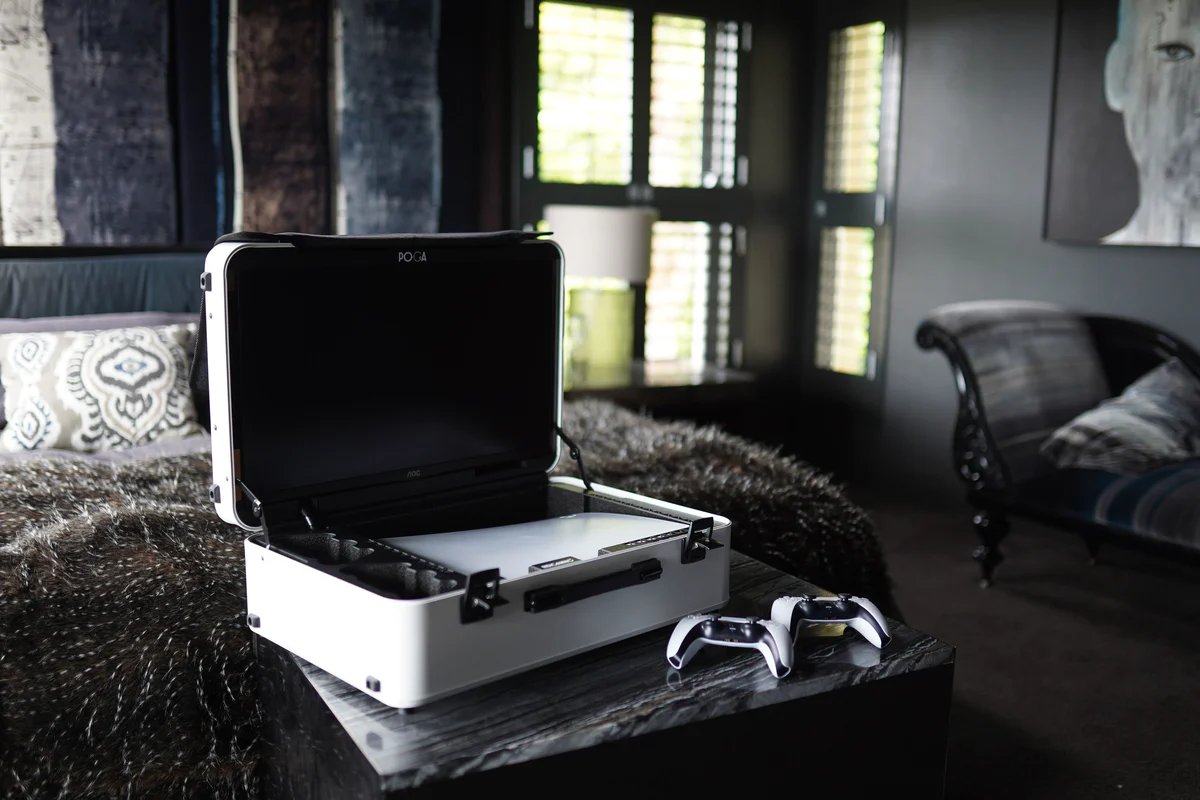
Understanding POGA Pricing
POGA operates in the premium tier ($700–$2,000+) with verifiable engineering backing every dollar. The price reflects high-refresh displays, aerospace-grade materials, and engineering that lets consoles run installed without overheating.
- ✓ 180Hz displays with 1ms response times
- ✓ Aluminum-composite shells with IP52 ratings
- ✓ Custom foam fitted to exact console models
- ✓ Removable trolley transport system
The Three Real Pricing Tiers
Portable gaming station prices cluster into three distinct categories. Understanding where each tier starts and stops helps you evaluate any product on its actual merits rather than just sticker shock or deals that seem too good to be true.
Tier 1: $25–$100 — Protection Only
Soft nylon or EVA bags with padded interiors, adjustable straps, and mesh pockets for cables and accessories. What you’re paying for here is exactly one thing: protecting the console from bumps, scratches, dust, and light moisture while it’s in transit.
Compact and lightweight for occasional transport
No integrated display or power management
Materials flex and wrinkle under real travel stress
Best for: Moving a console to a location with a screen already available.
Tier 2: $150–$700 — Mid-Range Integrated Cases
Built-in monitor (1080p–1440p, 15–24 inches), basic cooling features, hard or semi-hard shells, and room for console, controllers, and games. This is the most crowded, most confusing part of the market.
Self-contained setup with a real display
Wide range of specs and features at various prices
Monitor quality varies enormously within price range
Limited durability engineering or cooling design
Best for: Casual gamers wanting a complete setup without paying for premium materials or features.
Tier 3: $700–$2,000+ — Premium Integrated Stations
Materials, display performance, and thoughtful extras all step up together. This is where POGA operates. Premium specs include 180Hz displays with 1ms response times, aluminum-composite shells, IP ratings, and removable trolley systems.
Display specs rival dedicated gaming monitors
Built from materials rated for real travel stress
Integrated cooling lets console run installed
Premium price reflects verified engineering
Best for: Serious gamers who travel frequently and want durability, performance, and thoughtful design.
Price Tier Comparison Table
| Feature | Tier 1 ($25–$100) | Tier 2 ($150–$700) | Tier 3 ($700–$2,000+) |
|---|---|---|---|
| Display | None | 1080p–1440p, 60–144Hz | 1080p–4K, up to 180Hz |
| Response Time | N/A | 5–16ms typical | 1–5ms |
| Materials | EVA/nylon | Hard plastic/semi-hard shell | Aluminum-composite, IP rated |
| Cooling Engineering | None | Basic vents | Engineered airflow paths |
| Transport System | Soft handle | Hard shell handle | Removable trolley system |
| Cable Management | Minimal pockets | Organized straps/pockets | Custom USB hubs & power |
| Console Installed Play | Not designed for | Limited | Designed for it |
What Actually Drives the Price Differences
A few concrete factors explain almost the entire price gap in this category. Knowing them lets you evaluate any specific product on its merits rather than just comparing price tags.
Monitor Specifications
Resolution, refresh rate, and response time are the single biggest cost driver. A 60Hz 1080p panel and a 180Hz 1ms panel are not the same display wearing a different price tag — they’re genuinely different display technology. Higher specs cost significantly more to source and integrate.
Materials & Build Quality
Nylon and EVA padding is inexpensive; aluminum-composite shells with real IP ratings cost significantly more to engineer and manufacture. These durability improvements show up directly in the price and in how the case performs after months of real travel.
Cooling Design
A case with no ventilation plan is cheaper to make than one engineered with specific airflow paths. This is invisible in a spec sheet but matters enormously for whether you can actually play with the console installed without thermal throttling or shutdowns.
Transport System
Handles are cheap. A proper removable trolley system rated for the actual loaded weight of a console-plus-monitor case costs more to design and manufacture. This feature becomes essential when you're moving 20+ pounds through airports or train stations.
Integrated Extras
Built-in soundbars, wireless charging pads, custom USB hubs, and cable management systems are details that don’t show up as a single line item but collectively separate a case with a screen from a complete, considered setup that reduces daily friction.
R&D & Engineering
Premium tiers include R&D costs for custom foam designs, cooling simulations, and materials testing. These upfront costs are distributed across fewer units than mass-market options, which is why premium pricing includes engineering you can’t always see.
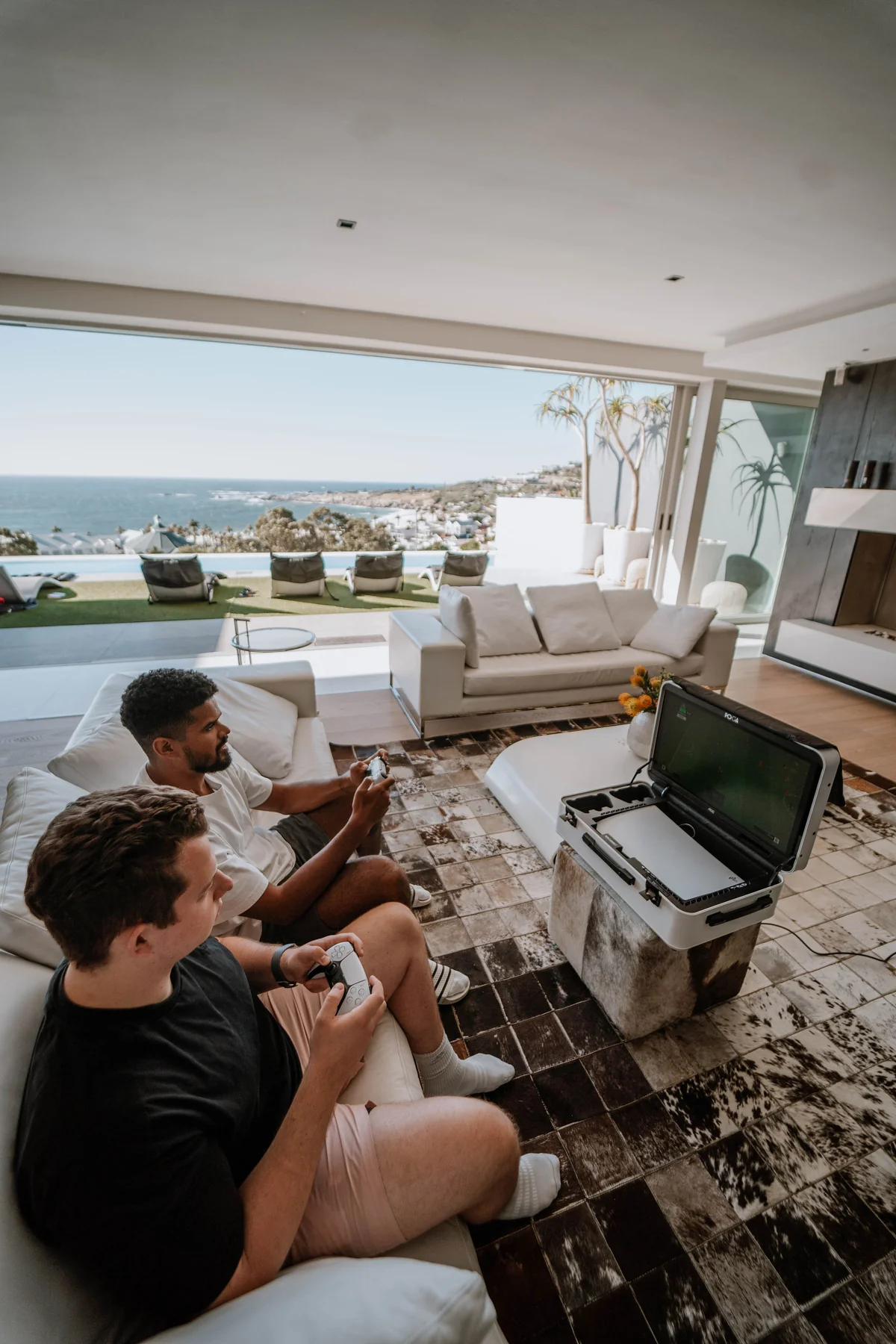
Real-World Value: Premium Tier Gaming
Premium portable gaming stations like POGA justify their price through engineering built for serious, frequent use. The investment makes sense when you actually use the case regularly — not just occasionally, but as your primary gaming setup across multiple locations.
- ✓ Display quality remains competitive for years
- ✓ Materials endure repeated travel and handling
- ✓ Cooling design prevents console thermal issues
- ✓ Resale value holds better than mid-tier options
The Question to Ask Before You Pay
Rather than asking "is this expensive," ask: does this price map to something I can actually verify?A listing that specifies exact monitor specs, named materials, an IP rating, and clear compatibility is telling you what your money buys. A listing that just says "premium" and "portable" without specifics is asking you to take the price on faith.
What to Look For in Specifications:
- • Exact display specs: resolution, refresh rate, response time
- • Material composition and IP rating (if applicable)
- • Cooling design or ventilation strategy
- • Console compatibility and foam fitting method
- • Warranty coverage and support
- • Real user reviews addressing durability and performance
Frequently Asked Questions
Why do portable gaming station prices vary so much?
Price differences come down to monitor quality, materials, cooling engineering, transport systems, and integrated extras. A $25 bag protects hardware; a $2,000 station includes a display that rivals gaming monitors, materials rated for real travel stress, and thoughtful features like removable trolleys and wireless charging.
Is the POGA price actually worth it compared to cheaper cases?
POGA operates in the premium tier ($700–$2,000+) with verifiable engineering: high-refresh displays (180Hz at 1ms response), aluminum-composite materials with IP52 ratings, custom foam fitted to specific consoles, and removable trolley systems. Cheaper tiers skip these specs entirely. Worth depends on how much you actually use it and whether travel durability matters to you.
Can I get a good portable gaming station for under $300?
Yes, Tier 2 cases in the $150–$300 range include 1080p/144Hz displays, basic cooling, and enough cable management for most use. You won’t get premium materials or transport extras, but you get a complete, self-contained setup at a reasonable mid-market price.
What makes monitor specs matter so much for price?
Monitor specs directly determine performance during gameplay. A 60Hz display and a 180Hz 1ms display are different display technologies, not the same panel at different prices. Refresh rate, response time, and resolution are the single biggest cost drivers in this category.
Are cheap $25–$50 travel bags worth it?
Yes, if your only need is protection during transport to a location with a screen already there. They excel at preventing scratches and dust. But they offer no integrated display, minimal cable organization, and materials that can wrinkle under real travel stress. Match the tier to your actual use case.
How do I know if a gaming case is actually good value?
Look for verifiable specs: exact monitor specs (resolution, refresh rate, response time), named materials, IP ratings, and clear compatibility. A price tag with detailed specifications tells you what your money buys. Listings that just say "premium" without specs are asking you to trust the brand over evidence.
Does a portable gaming station lose value over time?
Premium tiers like POGA hold value because the specs remain competitive even as new products launch. A 180Hz gaming display in 2026 is still capable gaming technology. Mid-tier specs (60Hz, 1080p) age faster. Investment-grade pricing only makes sense if the underlying specs actually endure.
The Bottom Line
There isn’t one "reasonable" price for this category, because there are three genuinely different products sharing a search term. A $30 bag is reasonably priced for protection-only travel. A $300–$500 case with a real 1080p/144Hz display and cooling vents is reasonable for someone who wants a complete setup on a moderate budget. And a $900–$2,000 station like POGA is reasonable specifically because the price maps to verifiable engineering — display performance, material durability, and cooling design that a lower tier simply doesn’t include.
The mistake isn’t paying a lot or a little — it’s paying premium-tier prices for mid-tier specs, or expecting premium-tier durability from a bag. Match the tier to what you’re actually going to do with it, and the price makes sense either way.
Compare every model in the full POGA guide.