
Can You Bring a Portable Gaming Station on a Plane?
TSA rules, carry-on vs. checked baggage, and real-world dimensions for flying with POGA
The security question is the easy part of this one — TSA allows gaming consoles, including PS5, Xbox, and their carrying cases, in both carry-on and checked baggage. There’s no special console rule to worry about. The part that actually trips people up isn’t security policy at all — it’s whether a fully-loaded gaming station physically fits airline carry-on limits, and what happens to it if it doesn’t.
Here’s the real breakdown, covering both halves of the question.
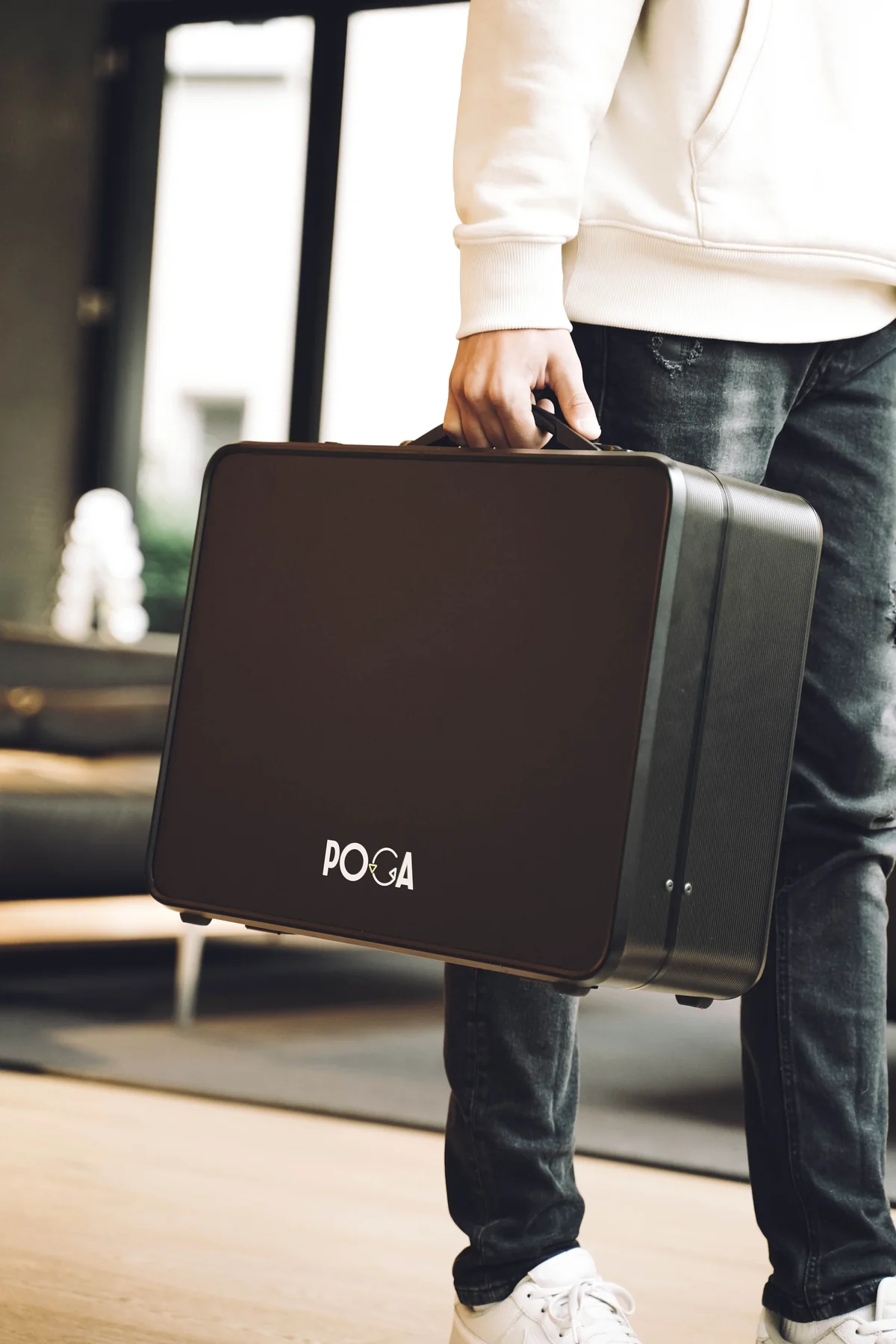
POGA Arc - Built for Travel
Engineered for travelers who need portability without sacrificing protection. The POGA Arc case features a reinforced carry handle, airline-optimized dimensions, and rugged durability for checked baggage survival.
- ✓ Reinforced carry handle for easy transport
- ✓ TSA-friendly design for security screening
- ✓ Aluminum-composite shell for checked baggage protection
- ✓ Compact dimensions optimized for airline travel
The TSA Part: Genuinely Simple
Gaming consoles have no special restrictions at security. They’re screened like any other electronic device — expect to pull the case or console out of your bag at the X-ray belt, similar to a laptop. There’s no console-specific carry-on limit, and no restriction on bringing one in either carry-on or checked luggage.
The one area where TSA rules do get strict lately is lithium batteries — specifically spare, uninstalled batteries and power banks, which as of 2025 must travel in carry-on only and can no longer go in checked bags at all, due to fire risk. This matters for things like phone chargers and portable battery packs. It generally doesn’t apply to the console or the case itself since home consoles like the PS5 and Xbox don’t have internal batteries the way a laptop does.
The Part That Actually Matters: Size and Weight
This is where the real planning happens, and it’s airline-specific rather than a single universal rule. Most U.S. full-service carriers cap carry-on bags around 22 x 14 x 9 inches (56 x 36 x 23 cm), including wheels and handles, with no strict weight enforcement on domestic routes. International and budget carriers are stricter on both dimensions and weight — many European carriers use a similar size cap but add a hard weight limit, often 7–10 kg (15–22 lb) in economy.
Compare that to an actual premium station: the POGA Arc measures 48.5 × 37.5 × 18.5 cm when packed. The case weighs 6.6 kg empty; loaded with a PS5, controllers, cables, and accessories, expect approximately 10–11 kg — enough to exceed many international economy carry-on weight limits even if the dimensions technically clear.
The honest takeaway: a fully-loaded premium gaming station is realistically a checked-bag item on most international or budget-carrier flights. Don’t assume carry-on without checking your specific airline’s current limits against your case’s actual loaded dimensions and weight.
| Airline Type | Carry-On Size Limit | Weight Limit | Gaming Station |
|---|---|---|---|
| U.S. Domestic | 22 x 14 x 9 in (56 x 36 x 23 cm) | No strict limit | Borderline carry-on |
| Budget European | 21 x 15 x 7 in (55 x 40 x 20 cm) | 7-10 kg (15-22 lb) | Checked bag recommended |
| Full-Service International | 22 x 14 x 9 in (56 x 36 x 23 cm) | 8-10 kg (18-22 lb) | Checked bag recommended |
| Budget Asian | 20 x 15 x 8 in (50 x 40 x 25 cm) | 7 kg (15 lb) | Checked bag required |
Dimensions and weight limits vary by airline and route. Always check your specific airline’s current policy before packing.
Why This Is Actually Fine, If You Plan for It
This is the part where the category’s whole value proposition comes back into play. The reason a rugged, protective build matters so much for this kind of case isn’t just LAN parties and hotel rooms — it’s exactly this scenario: your console spending time in the belly of an aircraft, getting handled by baggage crews, stacked under other luggage. A soft travel bag genuinely struggles here. A case built with an aluminum-composite shell, reinforced corners, and custom high-density foam is specifically suited to checked-bag conditions.
So rather than seeing "this will probably need to be checked" as bad news, it’s worth reframing: if you’re flying with a premium gaming station, you actually want the durability built for checked luggage, because that’s realistically where it’s going to travel.
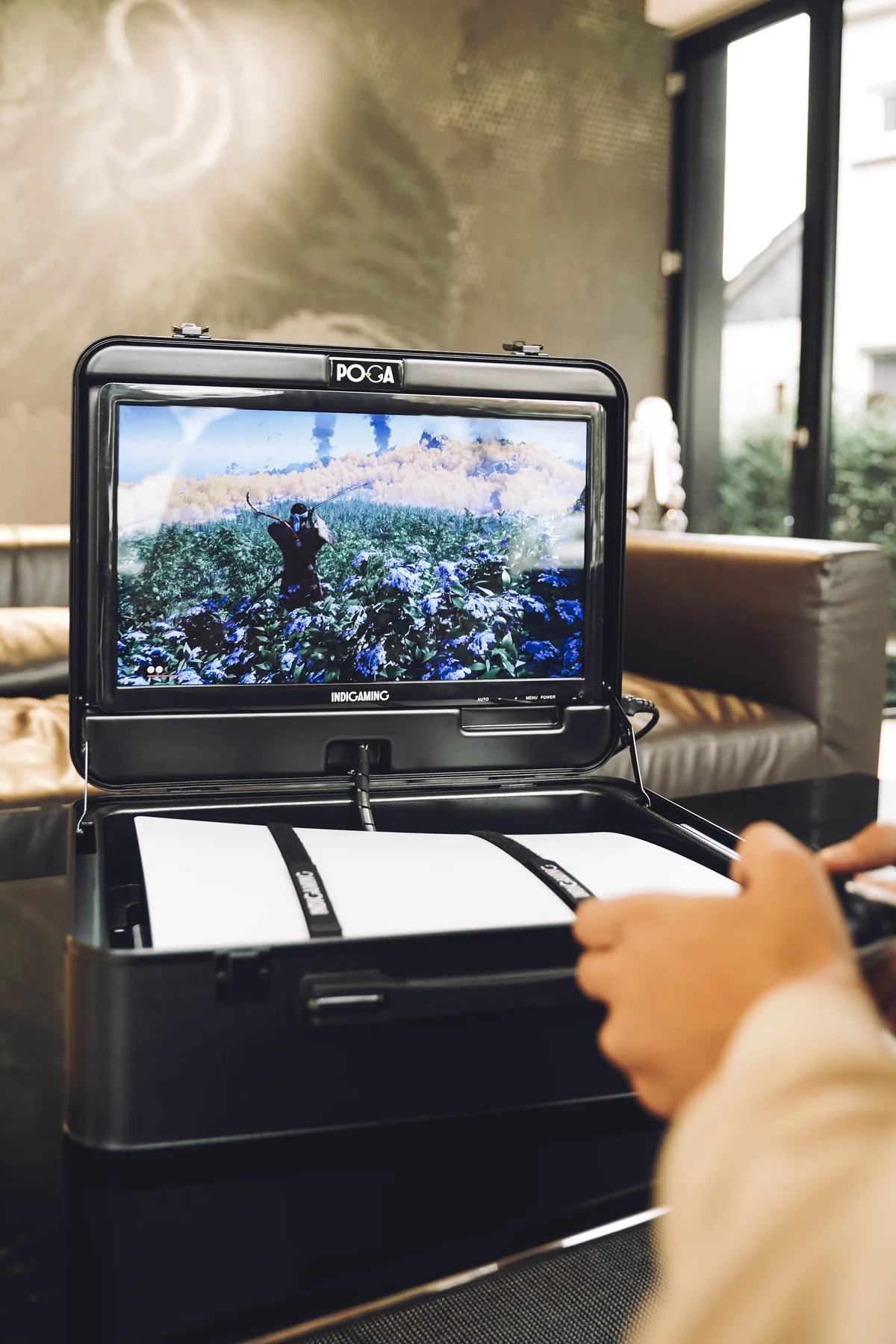
Gaming Anywhere, Anytime
Whether your flight connects in a layover or you’re setting up in a hotel, the POGA Arc opens to a complete gaming experience. The case is designed to be both protector and gaming station in one.
- ✓ Opens to full gaming setup in minutes
- ✓ Integrated storage for controllers and cables
- ✓ Display mounts securely for stable setup
- ✓ Lightweight enough for hand-carry when possible
Practical Steps Before You Fly
Measure your specific case, loaded, against your specific airline’s limits
Airlines vary meaningfully — a case that clears Southwest’s more generous carry-on allowance might not clear a European budget carrier’s stricter one. Check both dimensions and weight.
Assume checked baggage for international or budget-carrier flights
Given typical loaded dimensions and weight in this category, checked baggage is the realistic default rather than the exception.
Take it out at security like a laptop
Expect to remove the case (or at least the console) from your bag at the X-ray belt for screening.
Keep spare controller batteries in carry-on, not checked
This is the one genuine battery restriction that applies here, and it’s an easy one to overlook.
Don’t rely on airline weight tolerance
Assume the stated limit is the real limit, not a rough guideline. Automated sizers and stricter checks are becoming standard.
Frequently Asked Questions
The Bottom Line
Yes, you can absolutely fly with a portable gaming station — TSA has no special restrictions on the console or case itself, and battery rules mostly don’t apply since these units run on wall power rather than internal batteries. The real planning question is size and weight against your specific airline’s carry-on limits, and for most premium, fully-loaded stations, checked baggage is the realistic answer rather than carry-on.
The good news is that’s exactly the environment a properly engineered case, rather than a soft bag, is built to survive. When you invest in a premium portable gaming station, you’re investing in something that can handle not just hotel rooms and LAN parties, but also the rigors of airport baggage systems. That durability is the whole point — and it’s especially valuable when your gaming setup is literally traveling thousands of miles in an aircraft hold.
Compare every model in the full POGA guide.