
Buying Guide
Cheap Travel Bag vs. Real Portable Gaming Station: What's the Actual Difference?
A $30 PS5 travel bag and a POGA gaming station both claim to protect your console — but they're solving completely different problems. Here's the real breakdown.
Search "PS5 travel case" and you'll get two completely different categories of product mixed into the same results: a $25–$50 padded backpack, and a $700–$2,000 case with a built-in monitor and a trolley. Both are technically "portable console cases." Neither is wrong to call itself that. But they solve almost entirely different problems, and buying the wrong one for your situation is the most common regret in this category.
Here's what actually separates them, feature by feature — using POGA as the reference point for the "real gaming station" side, since it's a useful concrete example of what the premium tier is actually engineering for.
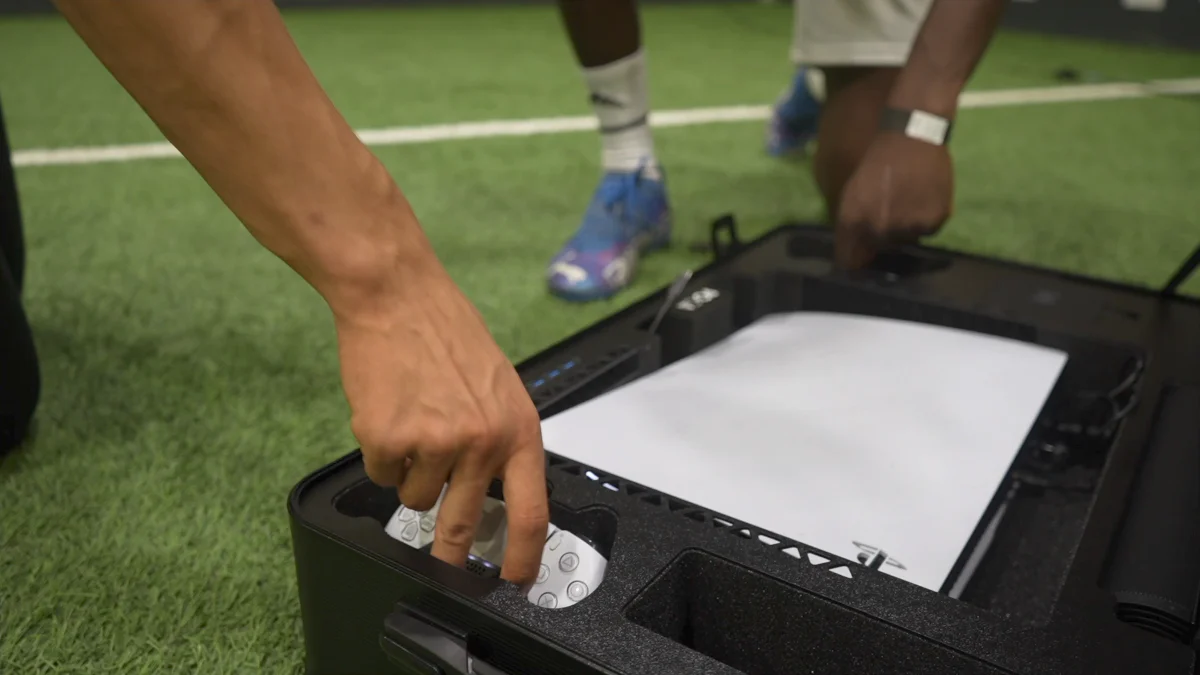
POGA Yez - Real Gaming Station
Unlike budget travel bags, POGA Yez is a complete portable gaming setup designed for immediate gameplay anywhere. It features integrated cooling, cable management, and a built-in monitor so you never depend on finding a screen at your destination.
- ✓ Integrated high-quality display included
- ✓ Engineered cooling ventilation system
- ✓ Complete cable management solution
- ✓ Professional-grade protection and durability
They're Solving Different Problems
A soft travel bag is, at its core, a padded container. Its job is to get your console from point A to point B without it getting scratched, bumped, or rained on. That's a real and legitimate need, and a lot of console owners genuinely just need that.
A portable gaming station is trying to solve a bigger problem: not just "protect the console in transit," but "let me actually play, immediately, wherever I end up." That means it isn't just storage — it's a complete, self-contained setup with its own display, its own power routing, and its own cable management, built so you never need a TV, a spare monitor, or a pile of loose cords at your destination.
Once you frame it that way, most of the feature differences make sense as consequences of that core distinction.
Travel Bag vs. Gaming Station: Pros and Cons
Travel Bag Advantages
- ✓ Affordable ($25-$100)
- ✓ Lightweight and compact
- ✓ Easy to carry like a backpack
- ✓ Good for protection during transit
- ✓ Works with any console model
- ✓ Minimal storage footprint
Travel Bag Limitations
- ✗ No built-in monitor
- ✗ No cooling ventilation
- ✗ Can't play with console inside
- ✗ Minimal cable organization
- ✗ Requires external screen at destination
- ✗ Limited durability for heavy use
Gaming Station Advantages
- ✓ Complete setup - play anywhere
- ✓ High-quality built-in monitor
- ✓ Engineered cooling system
- ✓ Professional cable management
- ✓ Durable aluminum/composite build
- ✓ Multiple color options available
Gaming Station Limitations
- ✗ Significantly higher cost
- ✗ Heavier (requires trolley for comfort)
- ✗ Takes more space to store
- ✗ Model-specific compatibility
- ✗ Longer setup time than a bag
- ✗ Not ideal for ultra-light travel
Feature-by-Feature Comparison
| Feature | Budget Travel Bag | Gaming Station (POGA) |
|---|---|---|
| Protection Level | Basic padding | Professional-grade engineering |
| Built-in Monitor | No | Yes (24" Full HD+) |
| Cooling System | None | Engineered ventilation |
| Cable Management | Mesh pockets | Integrated routing & hub |
| Play While Inside? | Not recommended | Yes, designed for it |
| Price | $25-$100 | $500-$2,000+ |
| Portability | Very portable | Trolley system included |
| Setup Time | Instant | 2-3 minutes |
Protection: Padding vs. Engineered Shell
Soft bags typically use nylon or polyester exteriors with foam or EVA padding inside. This genuinely helps against everyday bumps and light rain, but it has a real ceiling — a recurring complaint in customer reviews of budget bags is that the material is flimsy, flexes under pressure, and dents or wrinkles from ordinary handling rather than actual damage. That's not a design flaw exactly; it's just what you get from soft materials at a low price point.
A station like the POGA Lux, by contrast, uses an aluminum and composite shell with IP52-rated dust and water resistance and a high-density foam interior custom-cut to the exact console model. This is the difference between "should survive being carried gently" and "engineered to survive actual transit" — checked luggage, car trunks, being set down hard at a LAN party.
The Monitor: The Single Biggest Difference
This is the feature that actually defines the category split. Soft travel bags don't include a display at all — you still need a TV or monitor wherever you're going, which means the "portable" part of a portable console is only half solved. You can carry the console anywhere; you still can't necessarily play it anywhere.
A real gaming station builds the display in. POGA includes a 23.8-inch Full HD monitor with up to 180Hz refresh rate and 1ms response time — genuinely competitive gaming monitor specs, not a "good enough for travel" afterthought. That single feature is really the entire value proposition of the premium category: open the case, plug in one cable, and you have a complete setup with no dependency on whatever screen happens to be available at your destination.
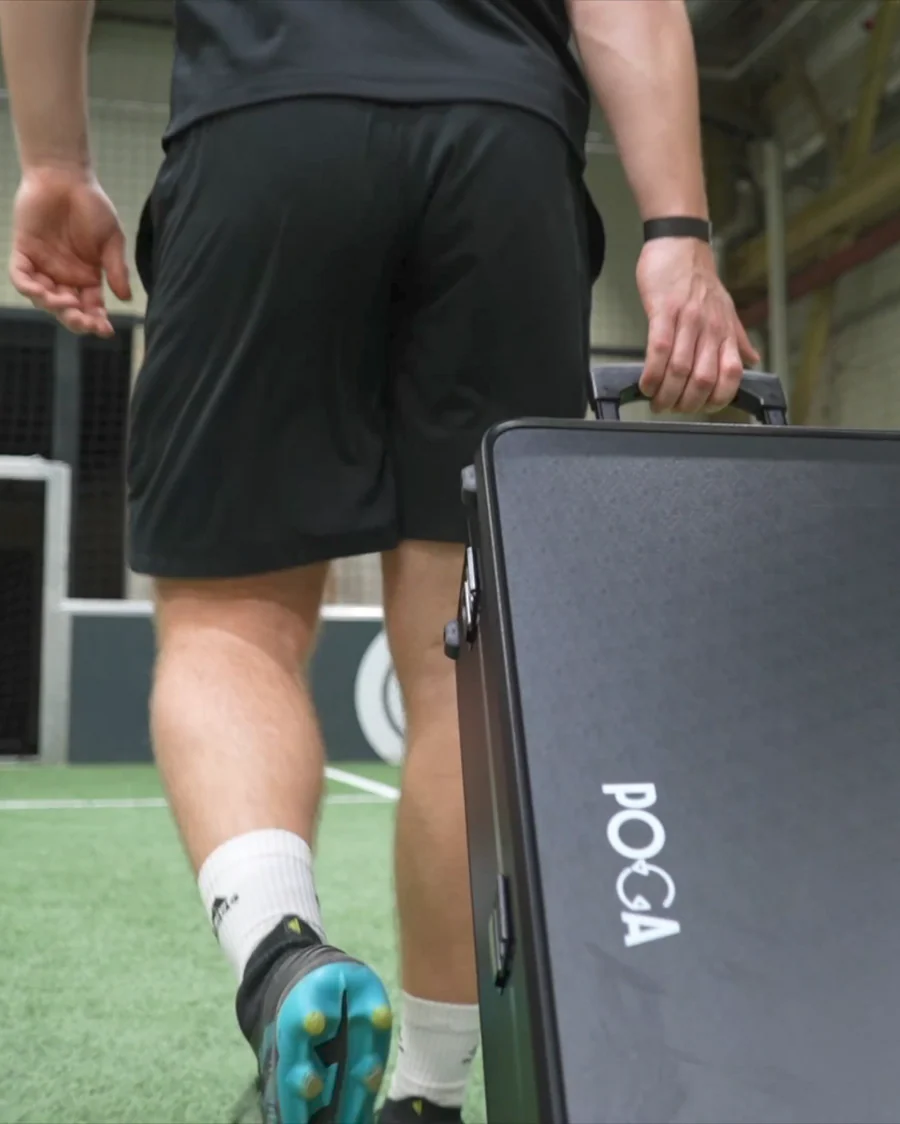
Real-World Portability
While travel bags are technically "lighter," a real gaming station solves portability differently. POGA includes a professional trolley system so you roll it rather than carry the full weight by hand. This is more practical for distances beyond a few meters, and your shoulders will thank you on a long trip.
- ✓ Removable trolley system for rolling
- ✓ Built for extended portability
- ✓ Professional-grade wheels and handles
- ✓ Comfortable for real-world distances
Cooling and Ventilation
This is where the gap is easy to miss but matters most. A soft bag has no ventilation design at all — it's not meant to hold a running console, only a powered-off one in transit. If you tried to play with the console sealed inside one, you'd be recreating the exact "enclosed cabinet" scenario that causes consoles to overheat and shut down.
A properly engineered station is built to have the console running inside it. POGA uses strategically placed ventilation slots designed to keep incoming cool air separated from outgoing warm exhaust air, plus heat-dissipating foam, specifically so the console can stay installed and powered on without overheating — with internal testing showing temperatures comparable to an open, freestanding setup. That's a fundamentally different engineering goal than a bag ever had to solve.
Power, Audio, and Cable Management
Soft bags typically have a few mesh pockets for loose cables and call it done — you're responsible for figuring out power and audio wherever you land. A real gaming station treats this as part of the design: POGA includes a Connect USB hub (2x USB-A, 2x USB-C) for peripherals, and higher-tier models add an integrated soundbar and wireless controller charging, so you're not hunting for a headset or a charging cable every time you set up.
Which One Should You Actually Buy?
Get a Soft Travel Bag If:
- • You're protecting the console during occasional, short trips
- • A TV or monitor will already be available at your destination
- • Budget is the primary constraint
- • You don't plan to play immediately upon arrival
- • You value minimal weight and maximum portability
Get a Real Gaming Station If:
- • You regularly need to set up and play somewhere without an existing screen
- • You're going to hotels, friend's places, tournaments, or a second home
- • You'd rather have one integrated object than assemble separate components
- • Protection needs to be serious rather than casual
- • You want competitive gaming specs (monitor refresh rate, response time)
Frequently Asked Questions About Travel Bags vs. Gaming Stations
Is a travel bag enough to protect my PS5?▼
A budget travel bag provides basic protection for short trips where the console will be powered off. If you need to play immediately at your destination or require protection during checked luggage, a dedicated gaming station is more reliable.
What's the main advantage of a portable gaming station over a travel bag?▼
The built-in monitor. A gaming station lets you play anywhere immediately without needing an external screen, while a travel bag only protects the console in transit.
Can I play console games inside a travel bag?▼
No. Travel bags have no ventilation design and lack a monitor. A portable gaming station is engineered for active gameplay with proper cooling and a built-in display.
How much more expensive is a gaming station than a travel bag?▼
Travel bags range from $25-$100, while gaming stations range from several hundred to nearly $2,000. However, a gaming station includes integrated monitor, cooling, and cable management that would cost significantly more if purchased separately.
Which should I buy for occasional travel?▼
If you travel occasionally and will have access to a monitor/TV at your destination, a travel bag is sufficient. If you need to play immediately without an external screen, a gaming station is the better choice.
Do travel bags have proper cable management?▼
Budget travel bags typically have mesh pockets but minimal cable organization. Gaming stations like POGA include dedicated routing and integrated connectivity solutions.
Can my console overheat in a travel bag?▼
Yes, if powered on. Travel bags lack ventilation design. Portable gaming stations are engineered with cooling pathways to prevent overheating during extended play sessions.
The Bottom Line
A cheap travel bag and a station like POGA aren't really competing products — they're answering two different questions. "How do I protect my console while it's in a bag?" and "How do I have a complete, working gaming setup the moment I arrive somewhere?" Know which question you're actually asking before you shop, and the "which one is worth it" decision gets a lot easier.
If your primary concern is protection during occasional travel with gaming happening at a destination with a screen already available, a travel bag is absolutely sufficient and more practical. But if you're someone who plays immediately, travels frequently, or wants independence from whatever setup might be available at your destination, a dedicated gaming station transforms portability from a theoretical feature into something you actually use.
Compare every model in the full POGA guide.